
An endoleak is the leaking of blood outside a stent graft and within an aneurysm sac This leak occurs when a blood vessel allows blood to flow into the aneurysm sac and another blood vessel allows the flow to escape the aneurysm sac. It’s a common complication of endovascular aneurysm repair (evar)
There are five types of an endoleak A type ii endoleak is one of the most common types Type 2 is the most common
It has been referred to as the “achilles' heel” of the endovascular approach to aneurysm treatment. An endoleak is a common complication of an endovascular aneurysm repair (evar) Learn more about the basics of endoleaks, including endoleak definition, symptoms, and treatments. Manifestations of endoleak range from asymptomatic to uncontrolled aortic rupture
Endoleaks result from a poor seal at the proximal or distal fixation sites or between the graft components, from patent lumbar or visceral vessels, or from the result of graft material failure. Usually an endoleak causes no symptoms at all There are 5 types of endoleaks, each with different causes and treatment options. Our skilled aneurysm care team can fix endoleaks before they become an emergency.
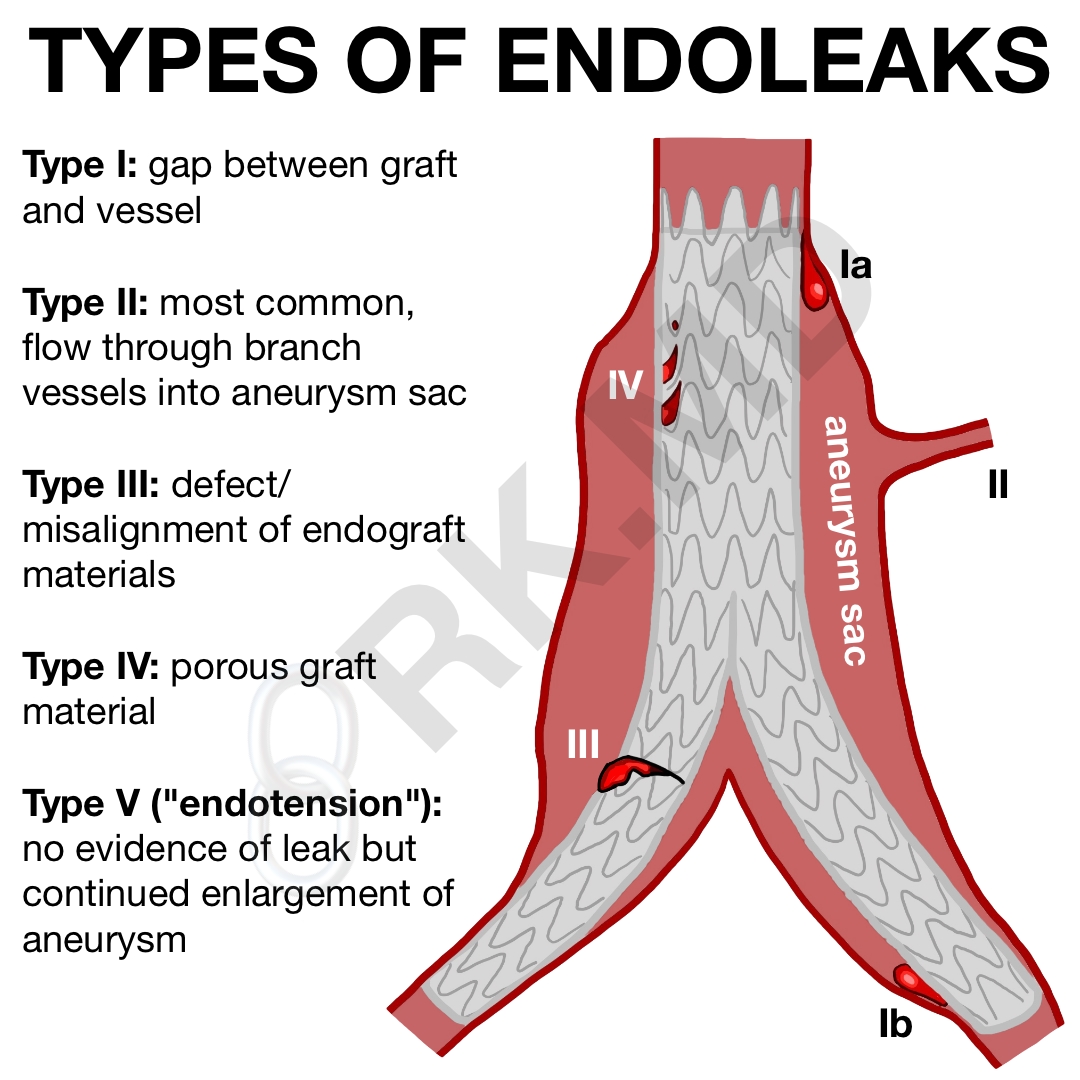
Learn about the various types and how they are diagnosed and skillfully treated at tampa general hospital. In this article, the authors review evidence on the indications, approach, and outcomes of current techniques for endoleak management Endovascular aneurysm repair, endoleak, embolization, interventional radiology. Endoleaks are a complication that can result after the aneurysm repair procedure, in which blood leaks back into the aneurysmal sac
Endoleaks can cause an aneurysm to become larger and even rupture Endoleaks are classified into five different types, and can occur in up to 25% of patients. There are several types of endoleaks, and the treatment depends on the type


